

K-Shaped Healthcare
By choice or necessity, consumers are exiting the insurance-intermediated system

The best of times, the worst of times
Flip on CNBC right now and you’ll hear pundits cheering on an absolutely frothtastic capital market. As I write this, Dell (!) is up 35% on the day, Anthropic just raised one of the largest private investment rounds in human history, and SpaceX is poised to deliver a payday so large it could transform the entire venture capital industry.

At the same time, consumer loan delinquency rates are hitting their highest levels since the ‘08 crisis, new grads face an impregnable job market, and Americans are so stretched that CPG executives are warning that customers are “literally running out of money.”
Maybe you’ve heard… we’re deep in the K-hole. Elbow-patched academics have pulled off a Patagonian Toothfish-level rebrand of the “wealth gap.”

This divergence between high- and low-income consumers is reverberating across industries - healthcare included.
For a perfect example, consider two competing headlines from this week.
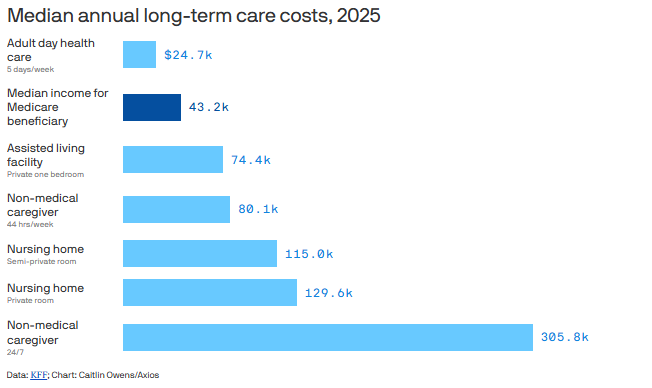
Axios published an analysis showing that most seniors cannot afford long-term care (assisted living, nursing home care), even though an estimated 70% will need it at some point.
Contrast that with an article from the Wall Street Journal on the emerging “med-à-terre” trend: wealthy seniors buying a second home near their preferred doctors.
Parisa Afkhami, a New York-based real-estate agent at Coldwell Banker Warburg, recently helped a client buy a Manhattan med-à-terre for close to $5.5 million. The international buyer has homes in Dubai and London but plans to visit the city for checkups twice a year.
Source: WSJ
Affluent individuals are increasingly becoming healthcare “super-consumers,” deploying discretionary income to escape the traditional system. A glossy ecosystem has emerged to serve this demand - premium longevity and concierge clinics, Prenuvo scans, Function Health panels, high-end aesthetics treatments.
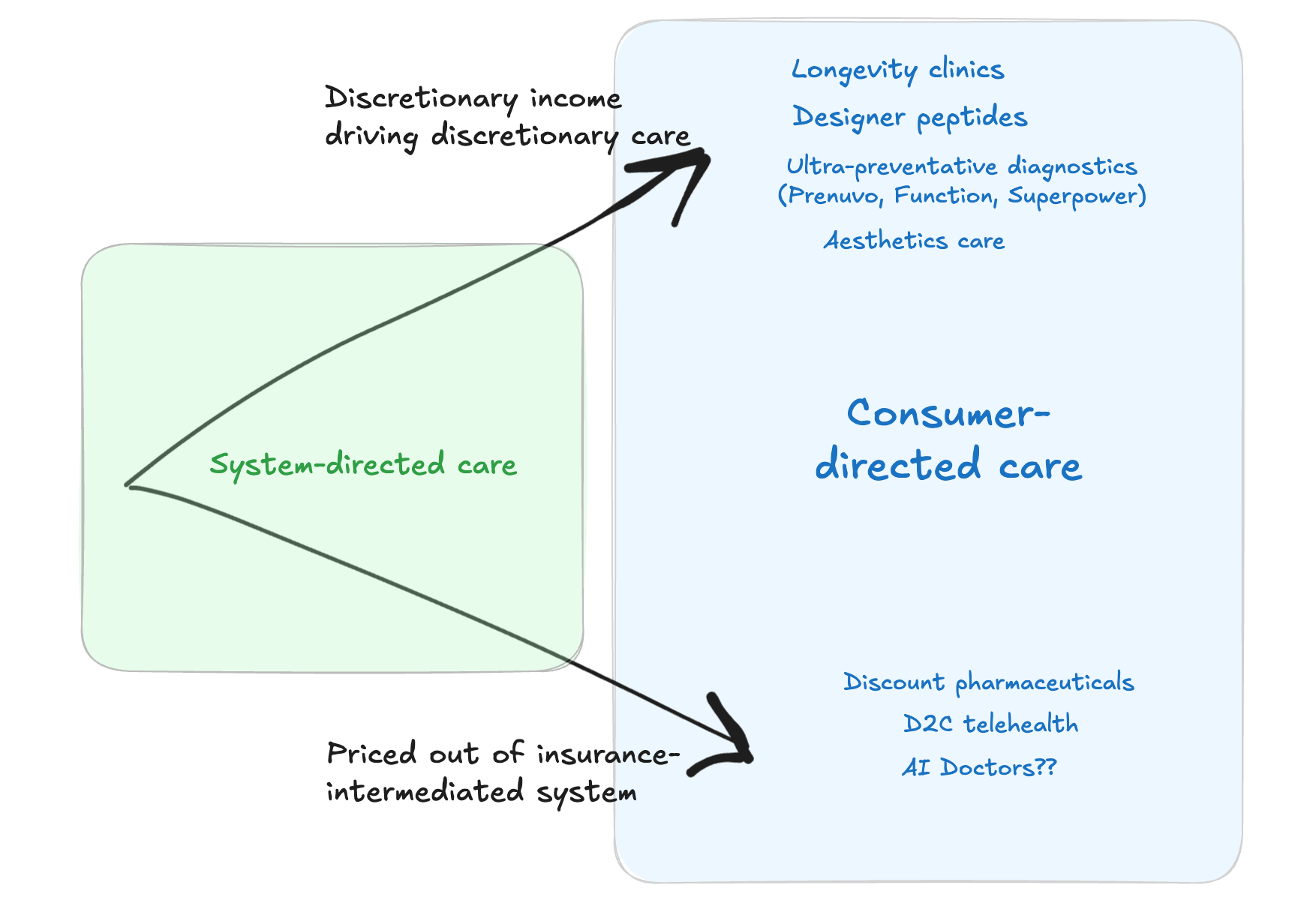
Meanwhile, low-income individuals are being increasingly squeezed out of the traditional healthcare system. Medicaid cuts, ACA subsidy reductions, and the steady creep of higher premiums and deductibles are forcing consumers out of insurance-intermediated care. Some early innovation has emerged to offer low-cost access, like discount pharmacy offerings and D2C telehealth. But it hasn’t organized as deliberately to satisfy the growing demand. Instead, individuals pushed out of the system are more likely to engage in care avoidance rather than care direction. Facing an outlook of chronic clinical undersupply, it’s hard to imagine care access improving until regulators adopt a more flexible posture towards AI-based prescribing platforms.
Earlier this month, Utah released initial YTD data from its pilot with Doctronic, where patients could renew existing prescriptions with Doctronic’s AI. The early results are promising - when the AI recommended prescription renewal for a patient, the reviewing physician agreed 91% of the time.
As care deserts expand across the country, it’s hard to ignore the promise of AI to provide some access to care when the alternative is no care at all.